Most staircases don't need to come out to look new. The structure stays; the balusters, posts, handrail and treads change. Here are four staircases Callaway Construction Inc. has remodeled around the Omaha metro, with photos from each job.
In a lot of houses around the metro, the staircase itself is fine. What dates it is what you see and touch: a golden oak handrail, turned oak spindles and newels, carpet worn flat on the treads. A stair remodel keeps the stringers, the framing and the shape of the stairs, and replaces the parts that show.
That can be as focused as new balusters and a handrail, or as complete as new newel posts, new tread caps, white risers and skirt boards, and the railing upstairs done to match. Chris Cannon walks the stairs with you, tells you what is worth keeping, and puts each part on its own line of the bid, so you can see what every piece costs before you decide.
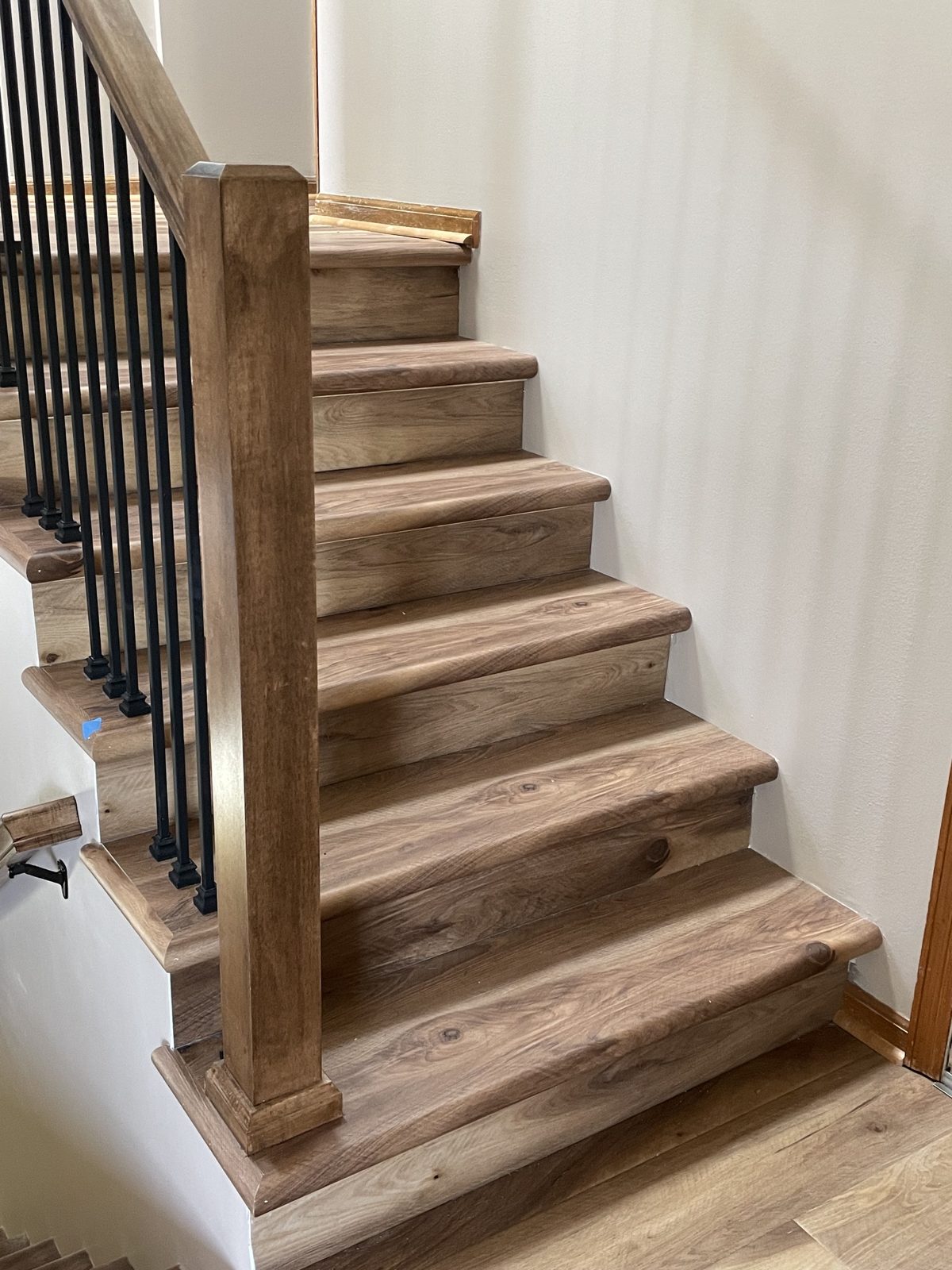
Pull the carpet off a stair in a newer house and you often find pressed board or plain pine treads, built to be covered rather than finished. That is what was under the carpet on the first staircase below. So there are three ways to get to wood: new stained caps on the open side with the carpet kept (staircase 1), plank flooring on the treads and risers with a matching stair nose (staircase 2), or oak treads with white risers (staircase 3). If your treads turn out to be oak, sanding and finishing them is on the table too.
The other half of most stair jobs is the railing. The old spindles come out, the newel posts and handrail are replaced or refinished so the wood matches, and black iron balusters go in (the kind often called wrought iron), usually two to a step, set into holes drilled in the treads or caps and in the underside of the handrail. Square or round, plain or with an accent baluster spaced along the run. Where there is a view worth keeping, cable rail does the same job with almost nothing in the way. A loft or overlook rail in view of the stairs gets the same posts and iron, so the two read as one piece.
Owner-run since 1995. Chris Cannon bids the job, runs the job and answers the phone.
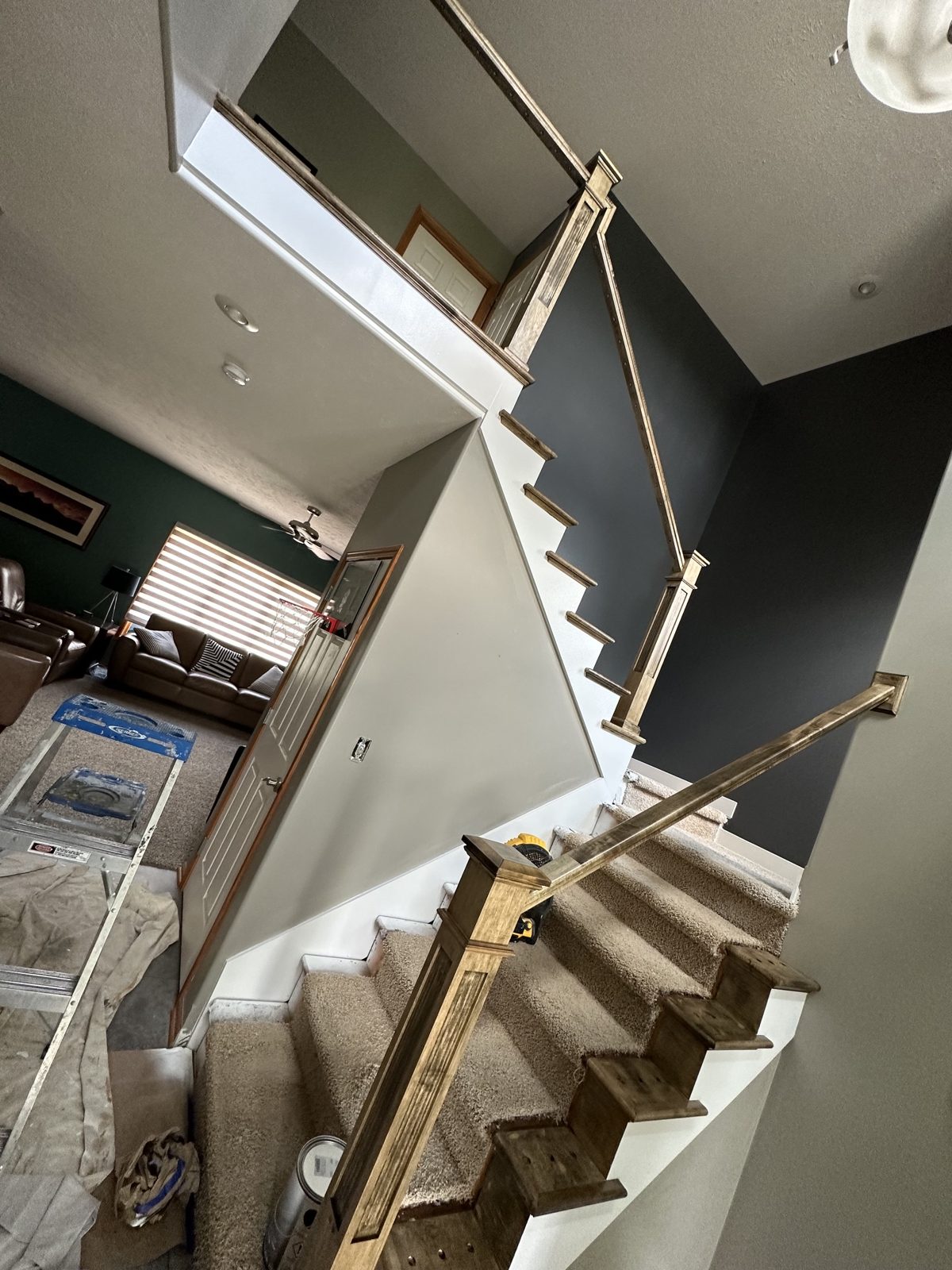
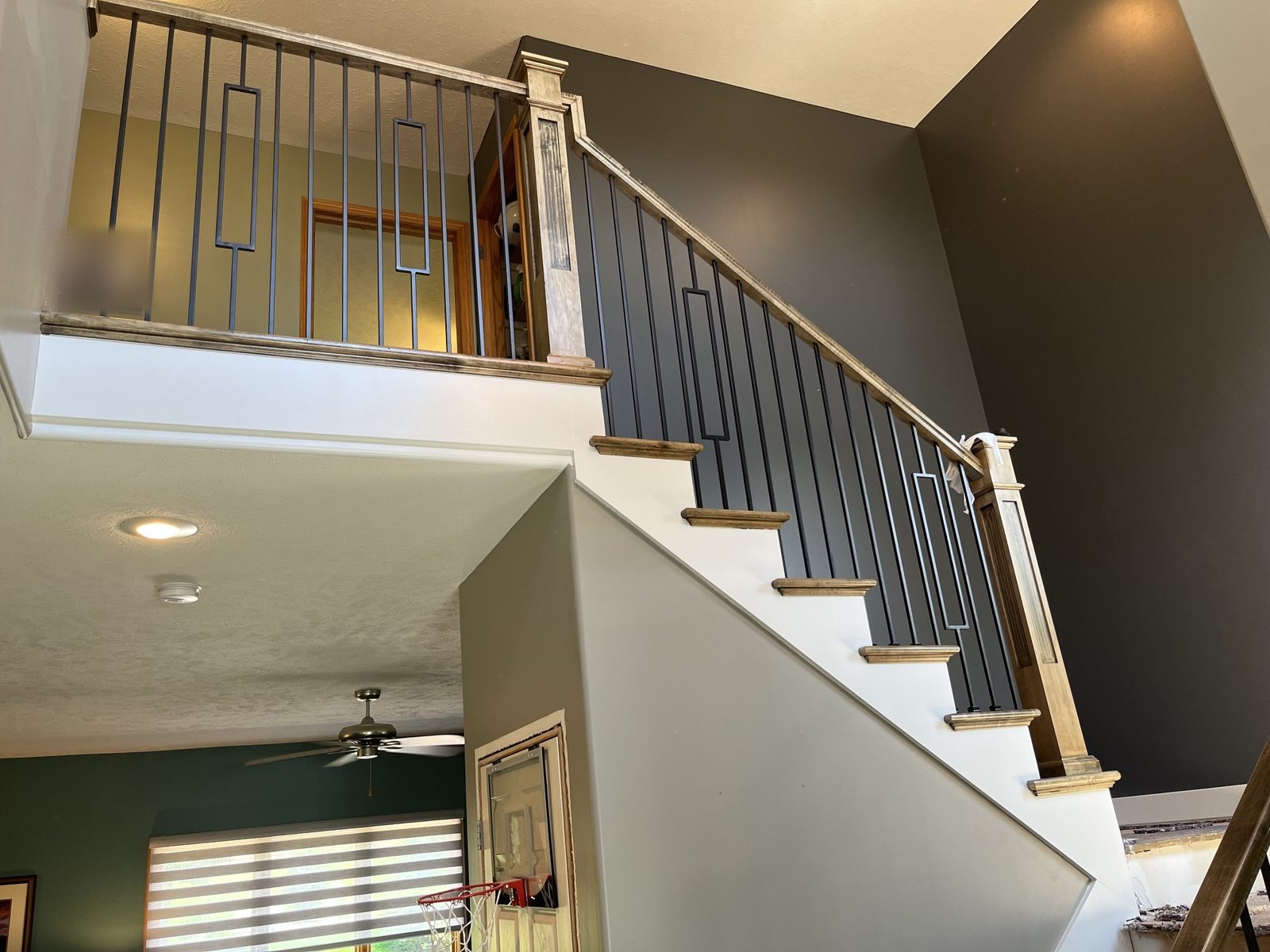
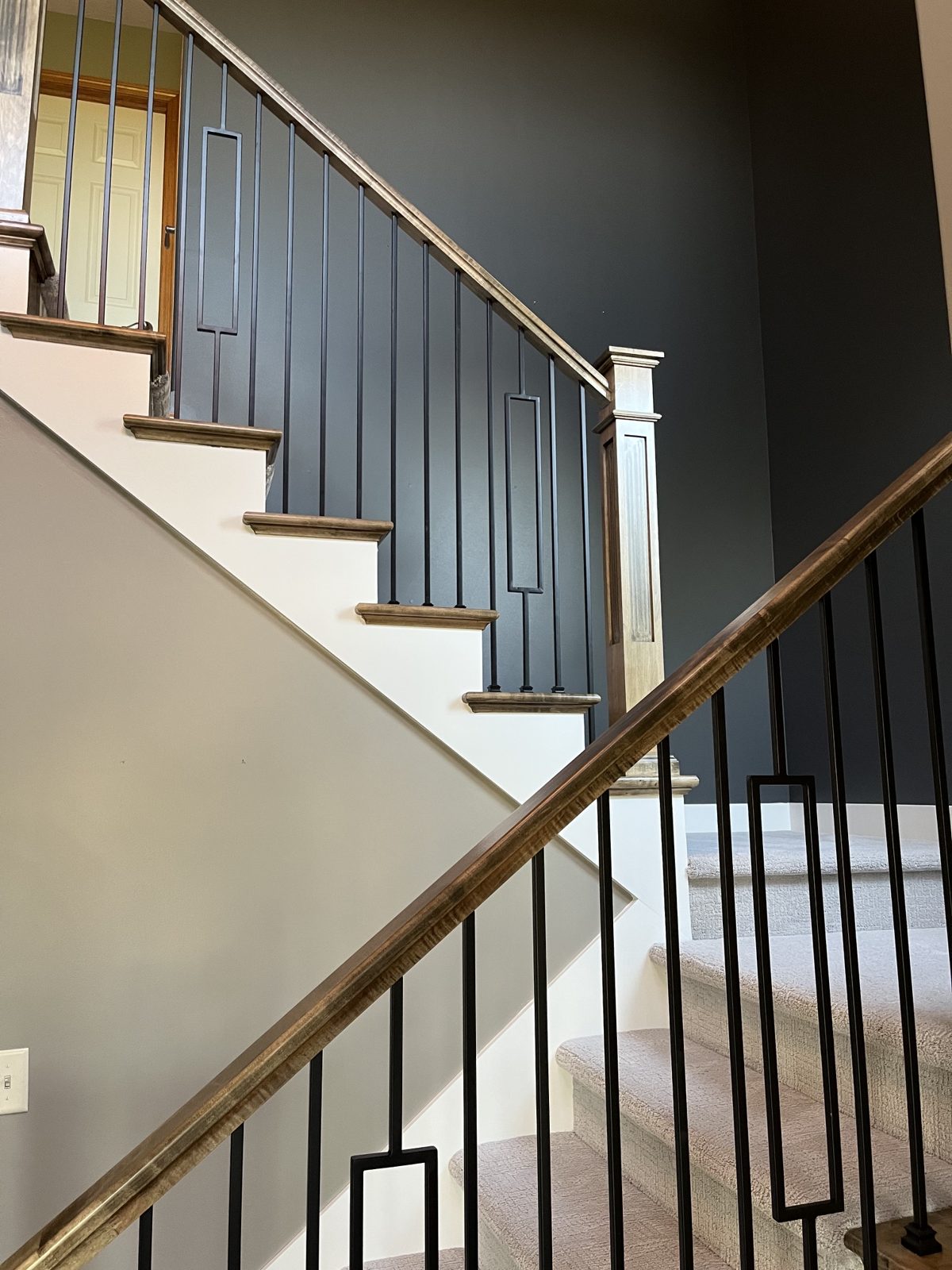
This staircase had a golden oak handrail and turned oak newels in front of an orange wall. In the first photo the old spindles are already out; the square marks on the bare tread ends are where they stood. The stairs themselves stayed. New stained box newels, handrails and tread caps went in on the stair and the overlook, the caps drilled two holes to a step, and the black iron went in last, with a box baluster spaced along the run. The carpet stays on the treads.
Start
Start
Mid-job
Finished
Finished
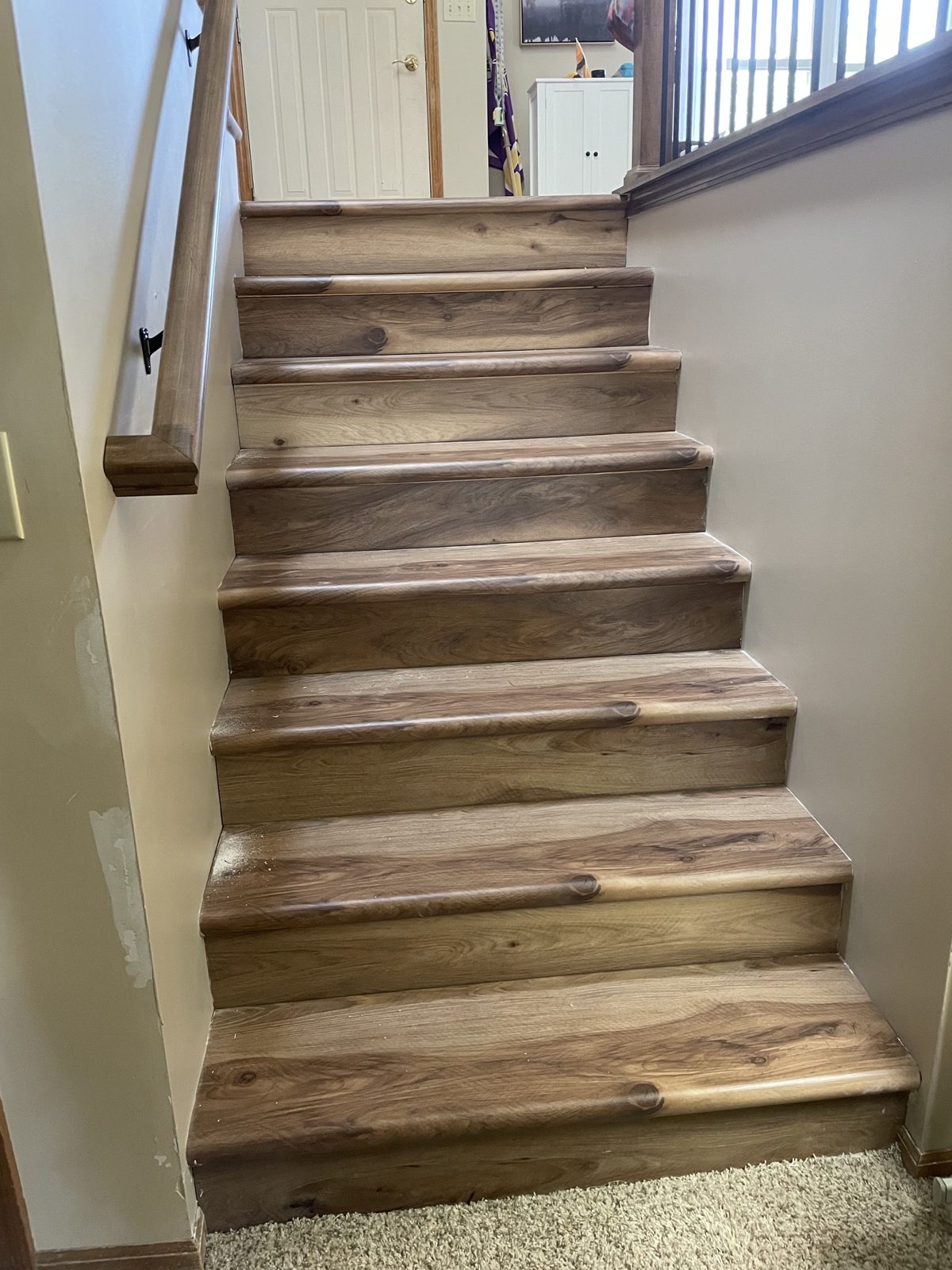
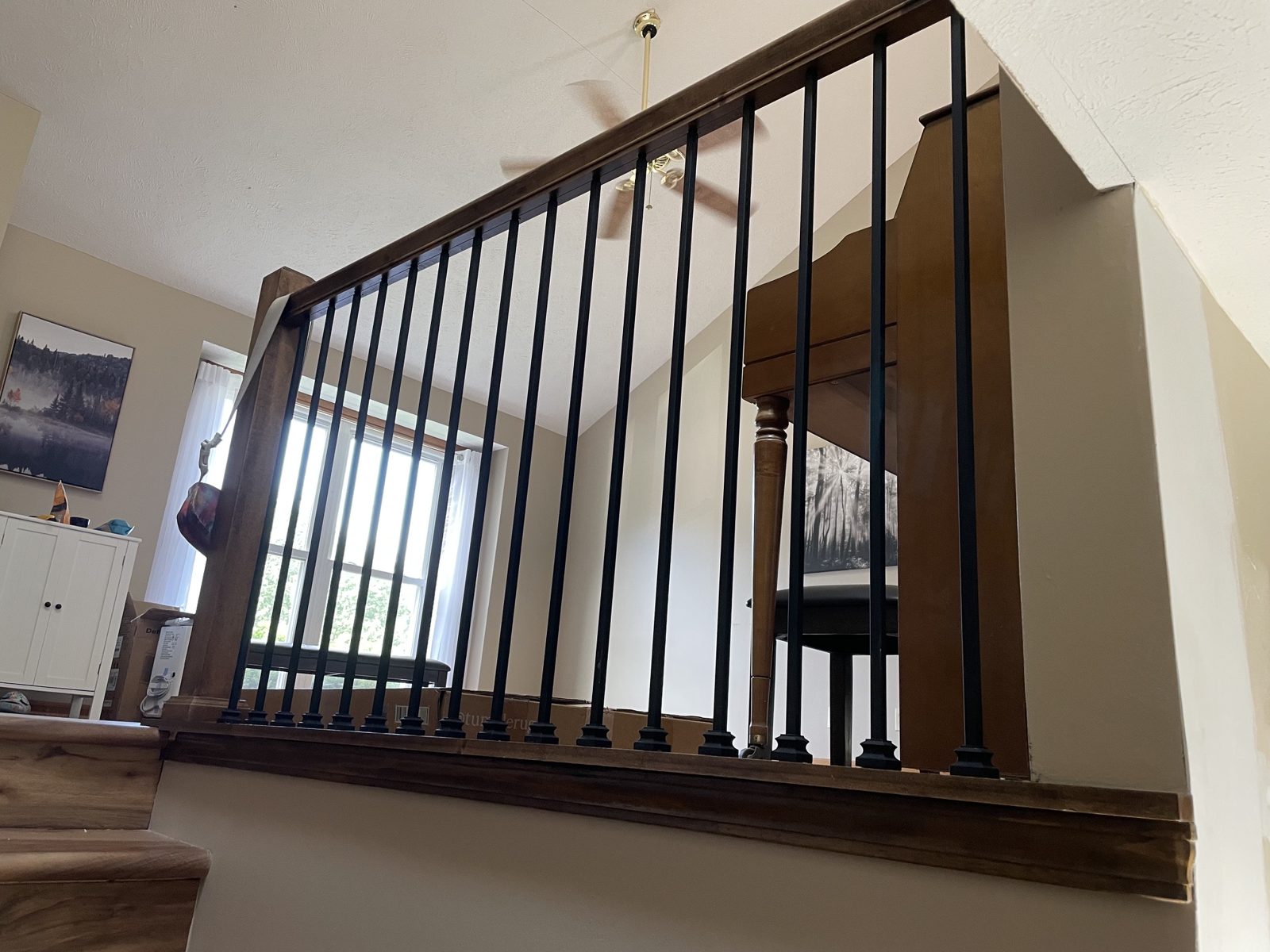
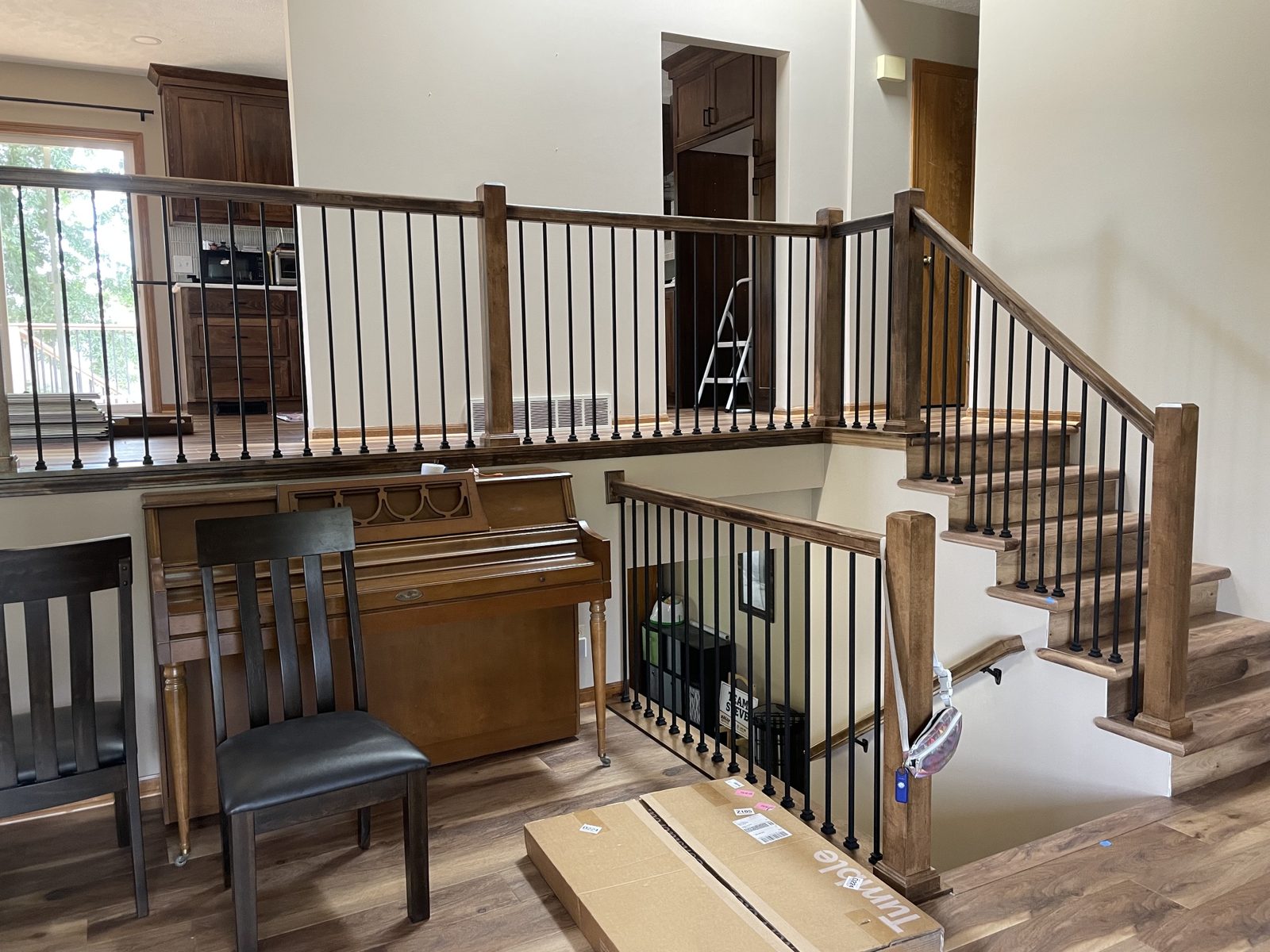
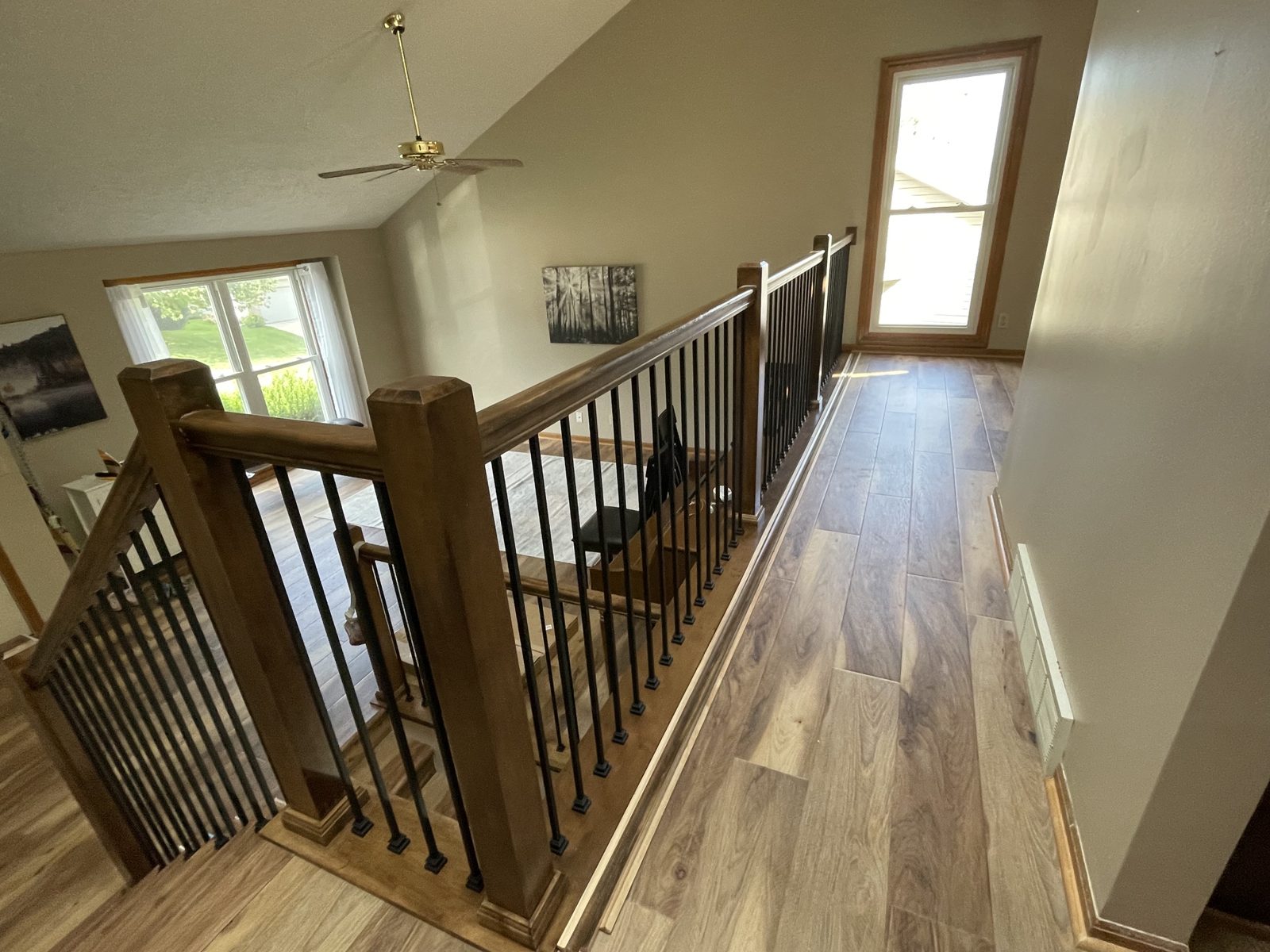
DetailThe stairs in this house were redone along with its kitchen and main bath. The treads and risers are covered in plank flooring that matches the kitchen and the loft, with a bullnose stair nose on every step so each edge is finished. Stained box newels and round black iron on the stair; the loft above has the same posts and iron on a half wall with a stained cap, and the opening at the top of the stairs is railed to match.
Treads
Rail
Loft
Loft
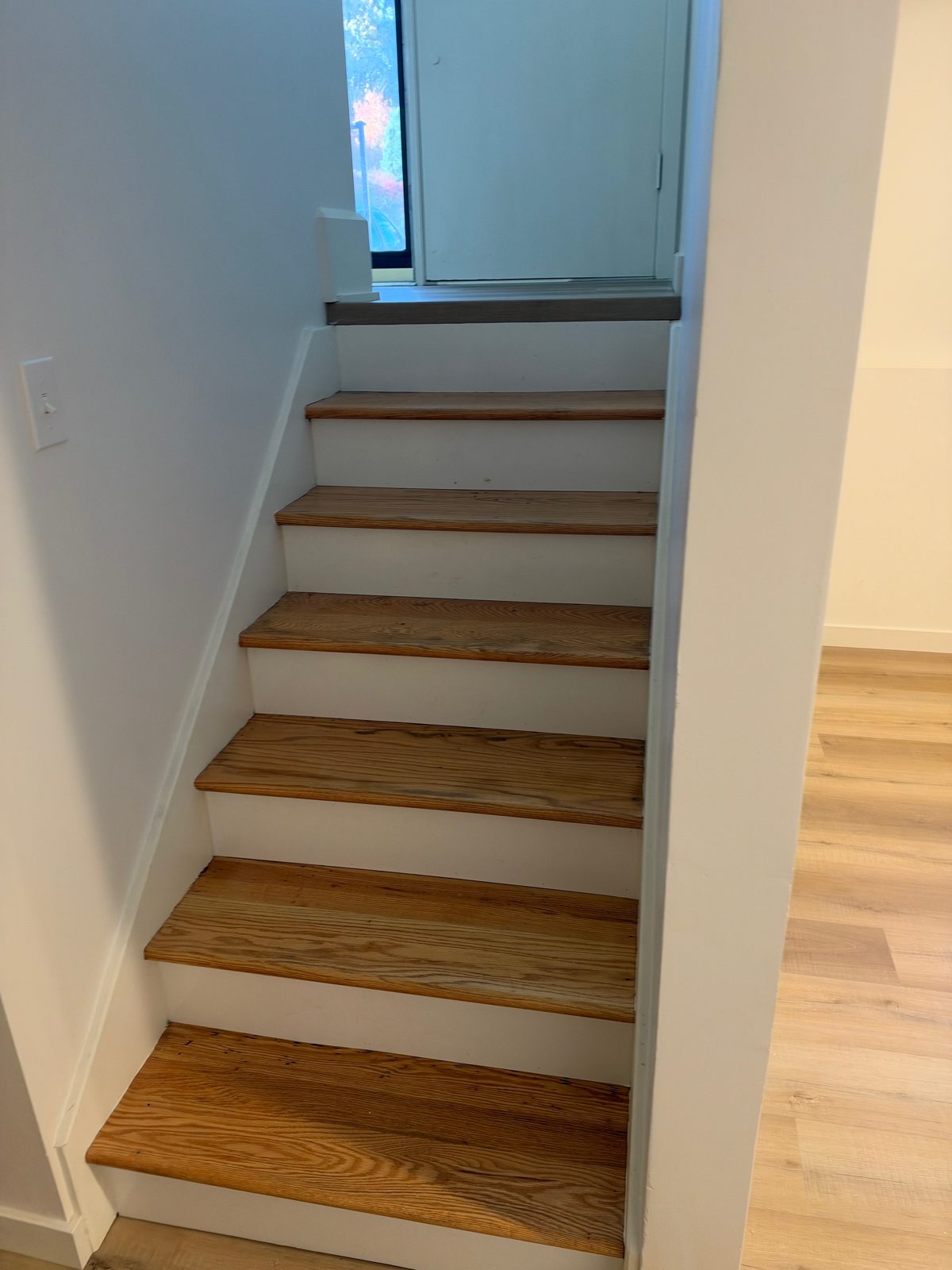
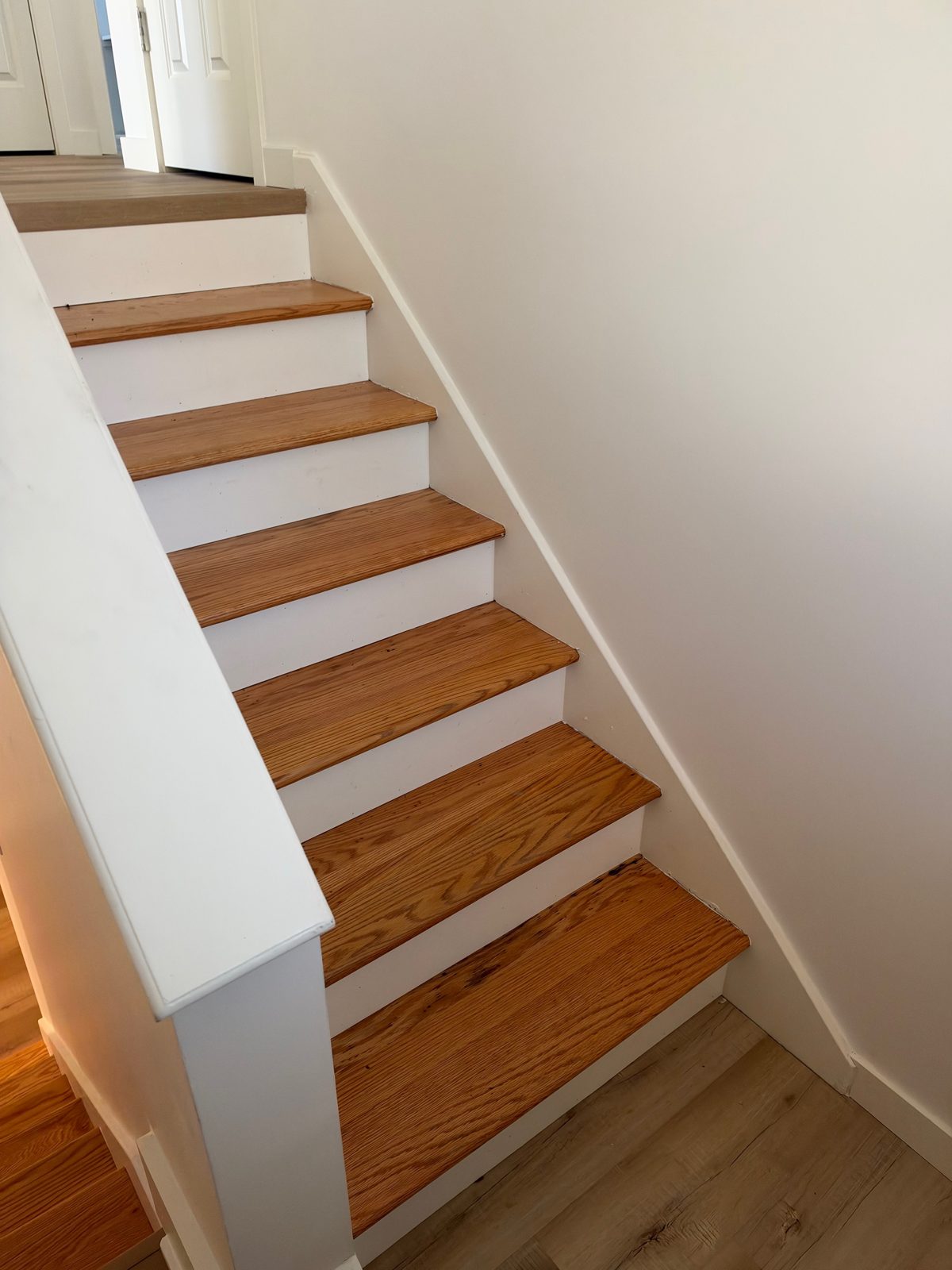
LandingPart of the full-house remodel near 116th and Douglas. In a split-entry house the stairs are the first thing you see from the front door, so they got the simple, bright version: oak treads, white risers, white skirt boards and a painted cap on the half wall, to go with the new floors and white trim through the rest of the house.
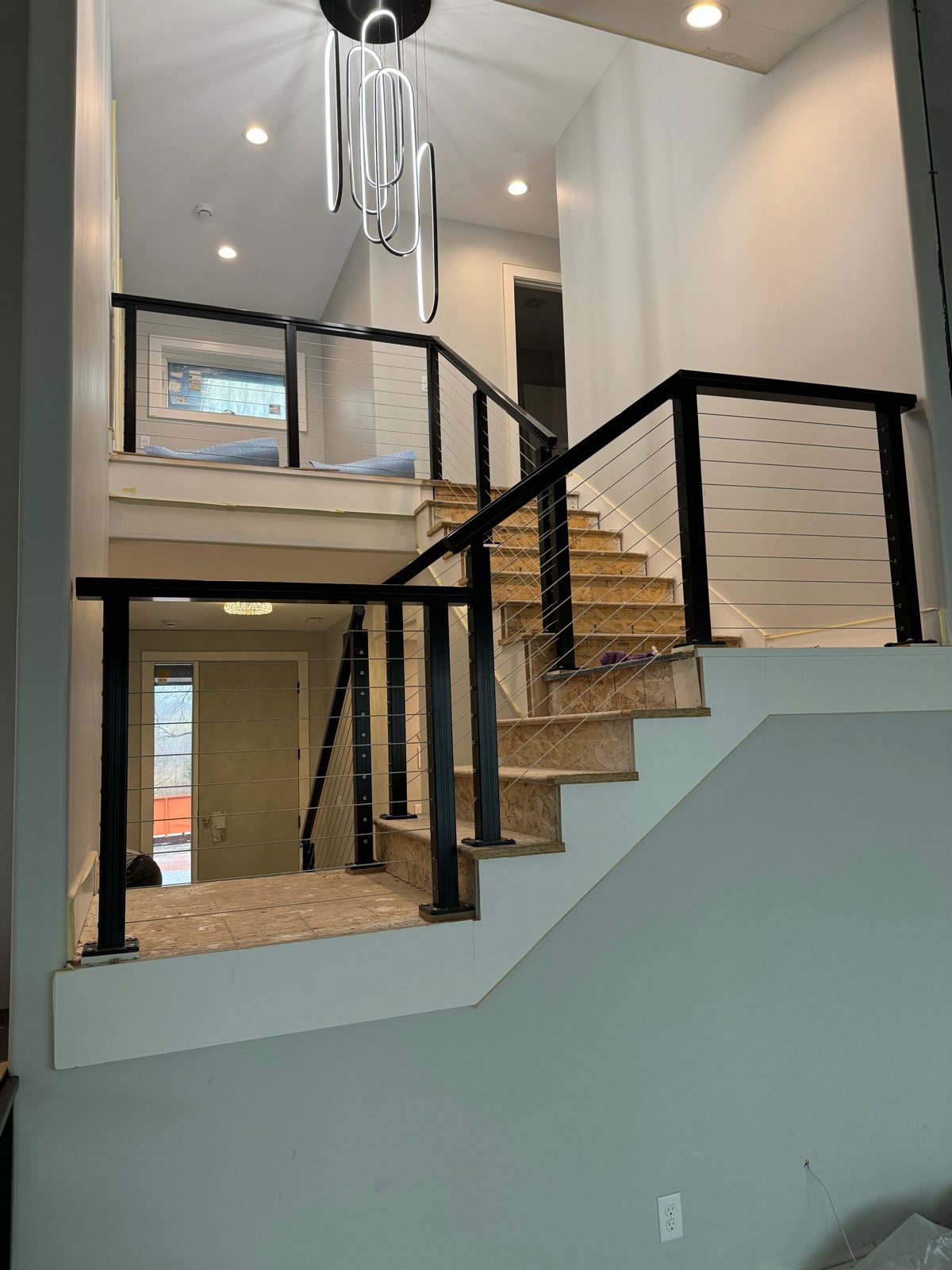
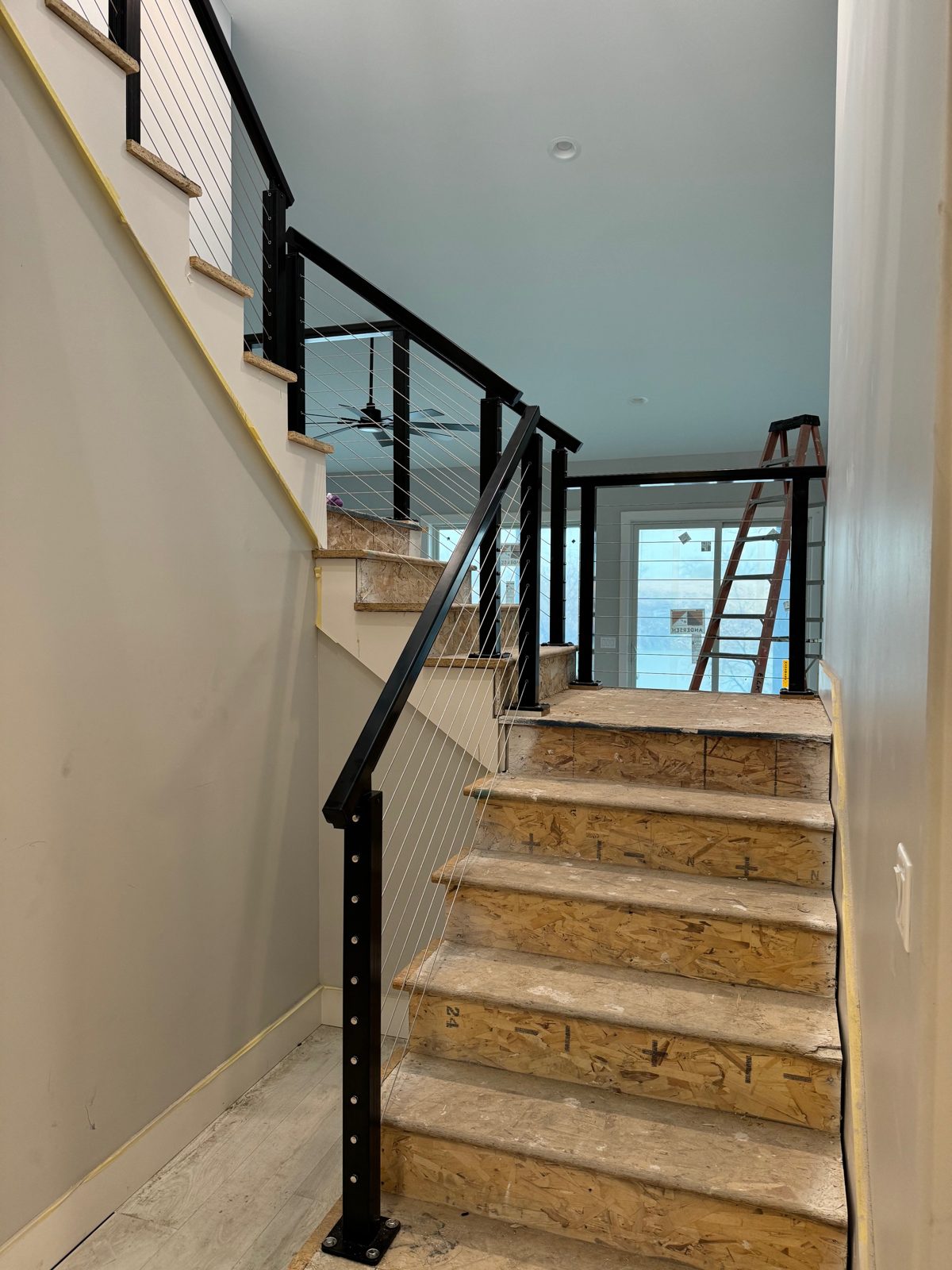
Cable rail is the opposite of a baluster: thin horizontal cables between black posts, so the railing nearly disappears and the foyer stays open. This one is black powder-coated aluminum, running up the stair and along the landing above, with new skirt boards on the stair. These photos are from the middle of the job, before the treads were finished.
Pick the parts that matter to you. Each one is its own line on the bid.
Yes, and that is what most stair remodels are. On the first staircase on this page the stairs stayed exactly as they were built. The old spindles, handrail and newels came out, new posts, rails and tread caps went in, and the iron went in last.
Yes. The carpet and pad come off, the treads and risers are covered or replaced, and every step gets a finished nose. The second staircase on this page is done in plank flooring that matches the floor around it; the third has oak treads with white risers.
Sometimes, but often not. In a lot of newer houses the treads under the carpet are pressed board or pine meant to be covered, which is what was under the carpet on the first staircase on this page. Lift the carpet at the open edge of one step, or let Chris look at the walkthrough. Oak can be sanded and finished; anything else gets capped or covered.
Iron balusters are the usual upgrade from wood spindles and they suit most houses. Cable rail is more open and more modern, and it makes the most sense where there is a view to keep, like a two-story foyer or an overlook. Chris can price both on the same bid so you can compare.
The cities around here build to the International Residential Code, and their own guideline sheets spell out the numbers: a graspable handrail 34 to 38 inches above the tread nosings on any stair with more than three risers (Gretna and La Vista say three or more), a guard at least 36 inches high where a floor or landing is more than 30 inches above the level below and 34 inches along the stairs, and no opening a 4-inch ball can pass through. Those are the numbers a new rail is built to.
Either works. Stained posts and rail with black iron is the look on the first two staircases here. White posts with a stained handrail is the other common choice, and it suits a house with a lot of white trim. A photo of what you like helps at the walkthrough.
If it is in view of the stairs, it usually should be, so the two match. On the first and second staircases on this page, the overlook and loft railings were done in the same posts, rail and iron as the stairs.
It depends on how much changes. New balusters and a handrail is a smaller job than new posts, tread caps, paint and a second railing upstairs.
Send a photo of the staircase from the bottom and one from the top through the quote page, or call (402) 740-6572. Chris will come look at it and write you a line-item bid.
Send a photo of your stairs and tell us where the house is. Chris will get back to you within a business day.