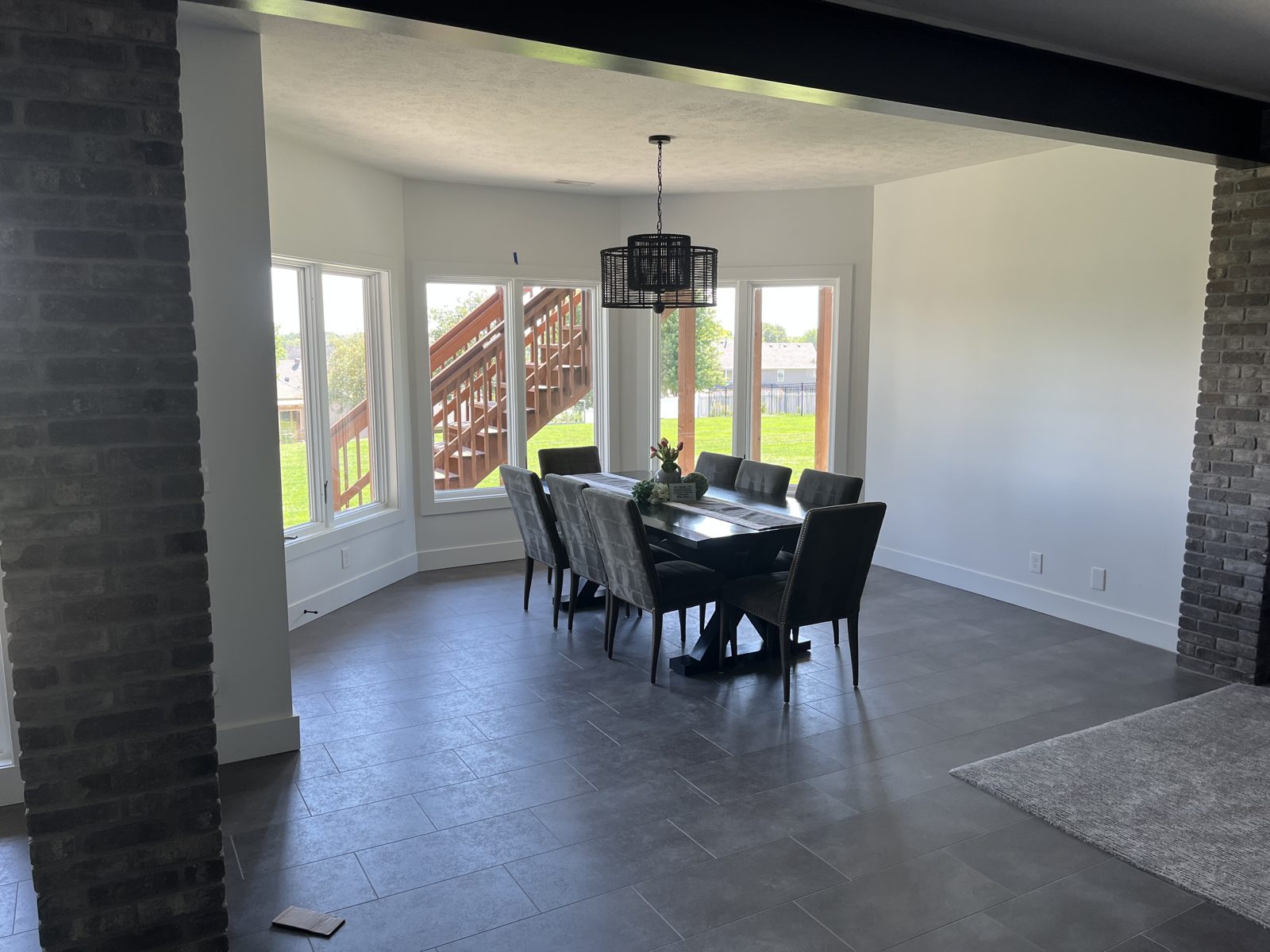
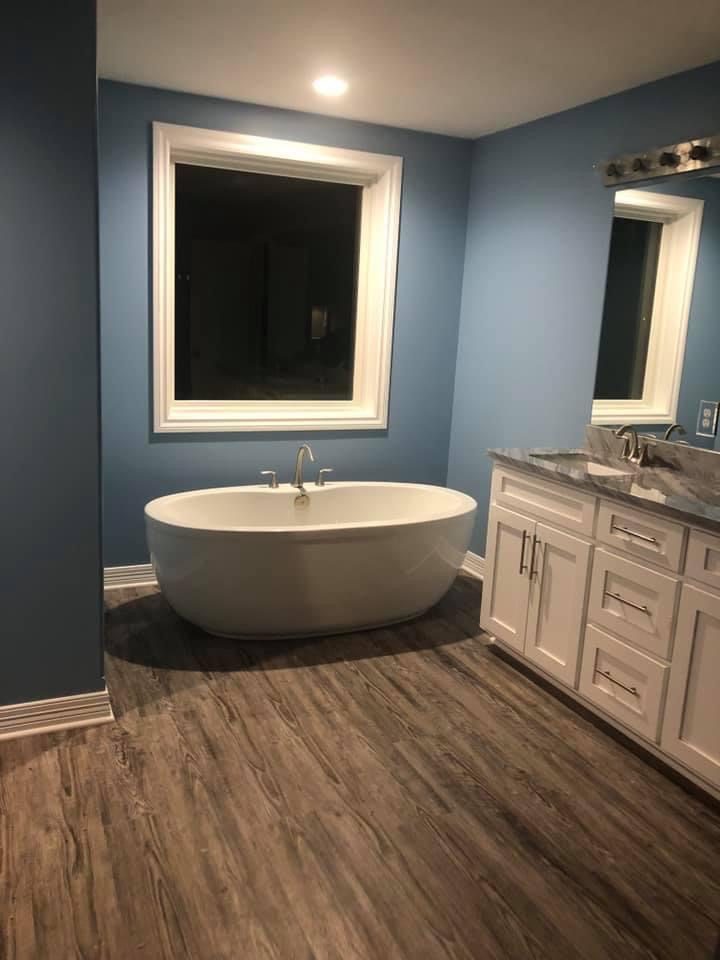
A floor is the finish you walk on every day, and the one that ties the rooms together. Here is flooring from four Callaway Construction Inc. jobs around the Omaha metro: plank floors through a whole house and up the stairs, and tile where water is the question.
Vinyl plank (LVP) is a wood-look plank that clicks together and floats over the subfloor. It handles water far better than wood, works on a basement slab, and costs less than hardwood, but it can't be sanded and refinished. Hardwood can be refinished more than once and feels like wood because it is, but it moves with humidity, and solid hardwood does not belong on a basement slab. Tile is the pick inside a shower and a strong one in basements, entries and bathrooms. Carpet still makes sense in bedrooms.
Most flooring problems start underneath. Plank floors need a flat base or the joints open and click; tile needs a stiff one or it cracks; anything on a concrete slab needs the slab checked for moisture first. Leveling a dip or fixing a soft spot before the new floor goes down is the cheapest time to do it, so ask any flooring contractor what happens to the subfloor before you compare prices.
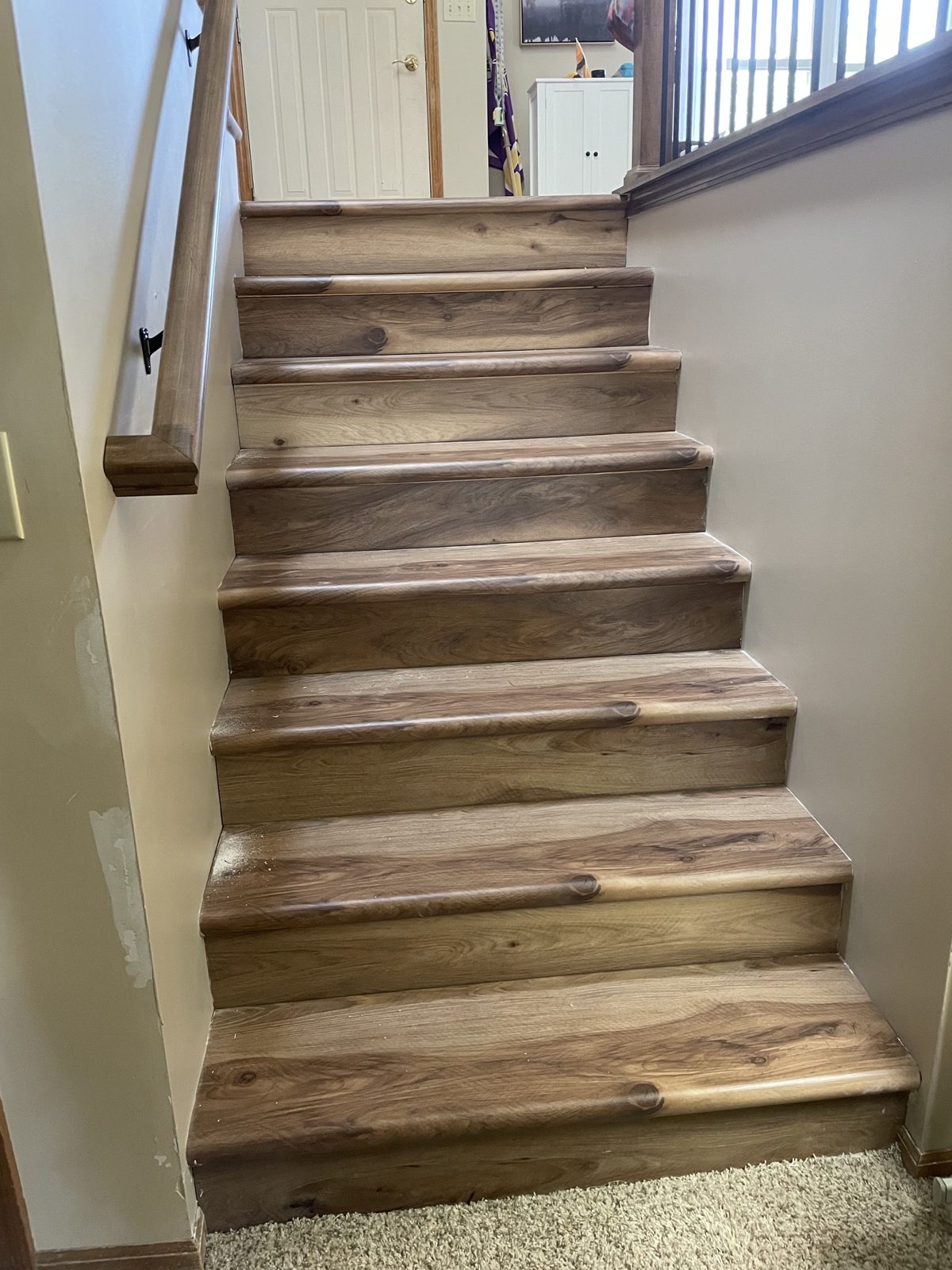
The finish details decide whether a floor looks done: baseboard set back on, door jambs cut so the floor slides under them instead of butting into them, clean transitions where two floors meet, and the stairs. A floor that stops at the top step and turns into carpet looks unfinished; carrying it down the stairs with a matching stair nose ties the house together, like the second job below.
Owner-run since 1995. Chris Cannon bids the job, runs the job and answers the phone.
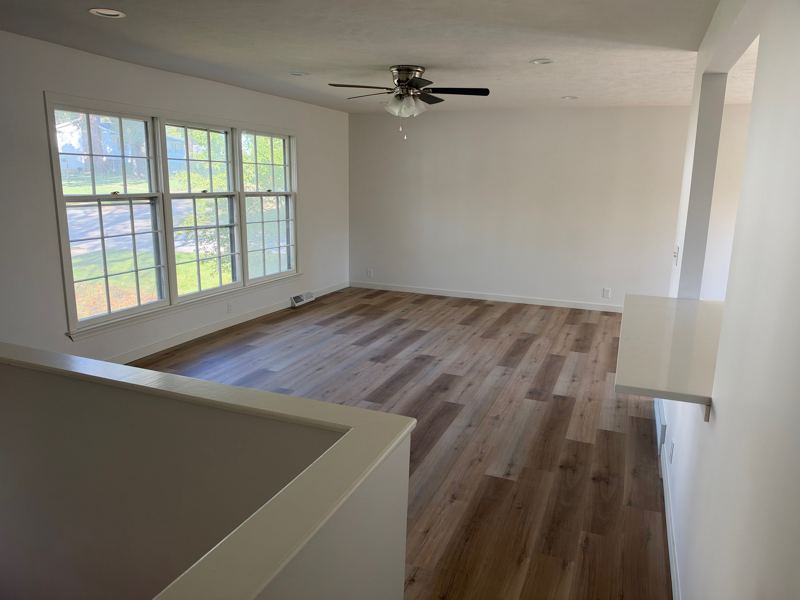
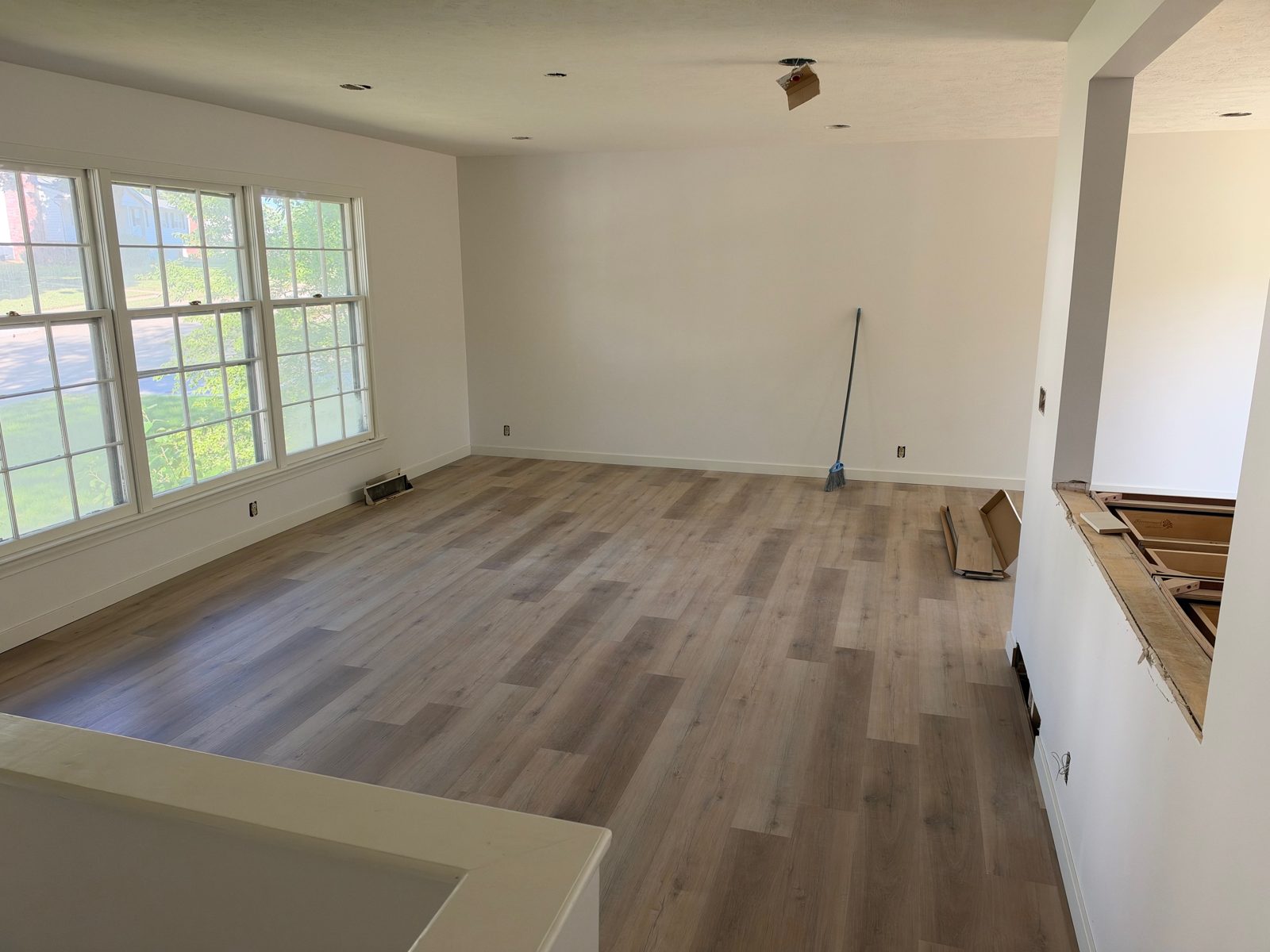
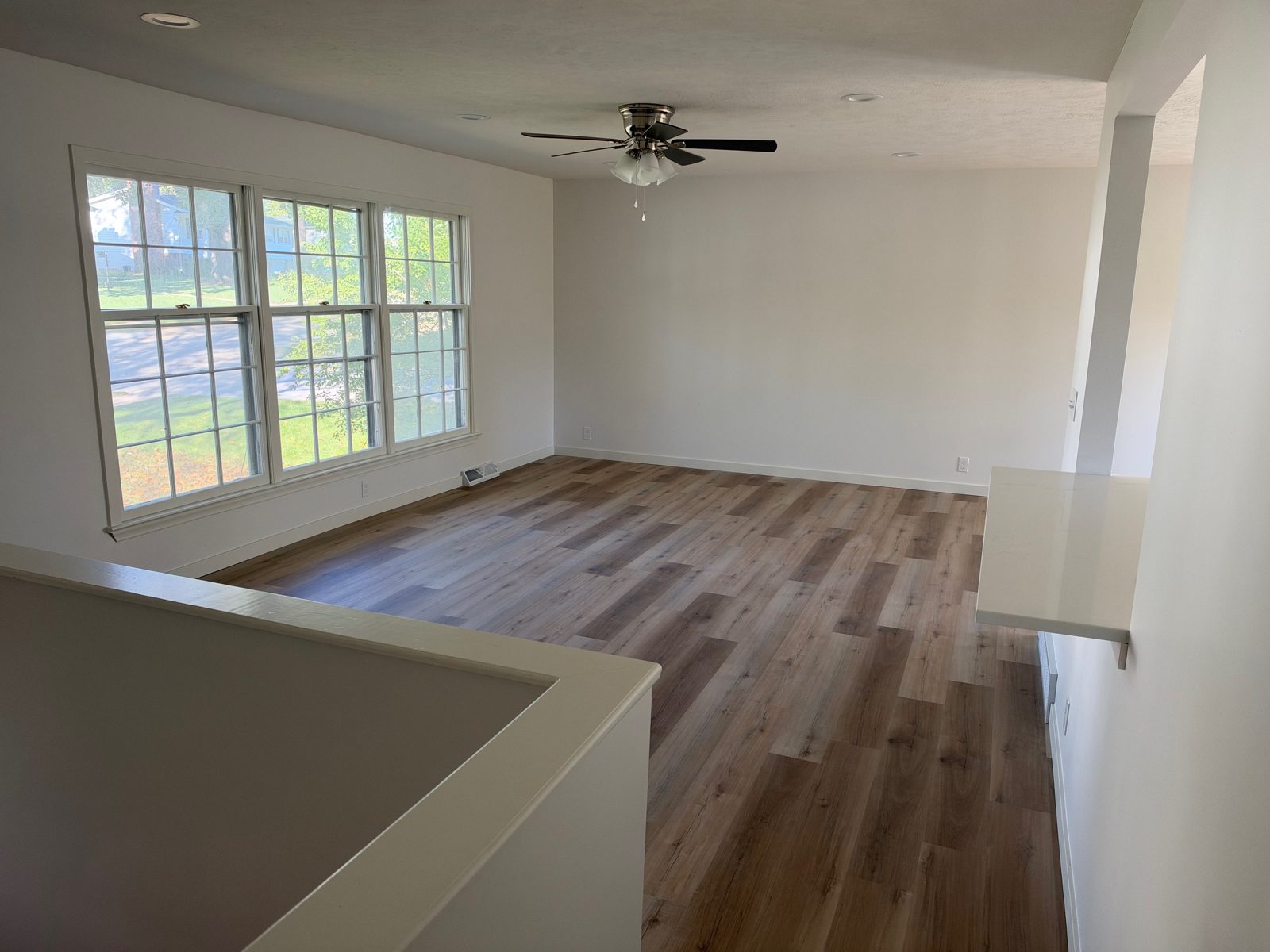
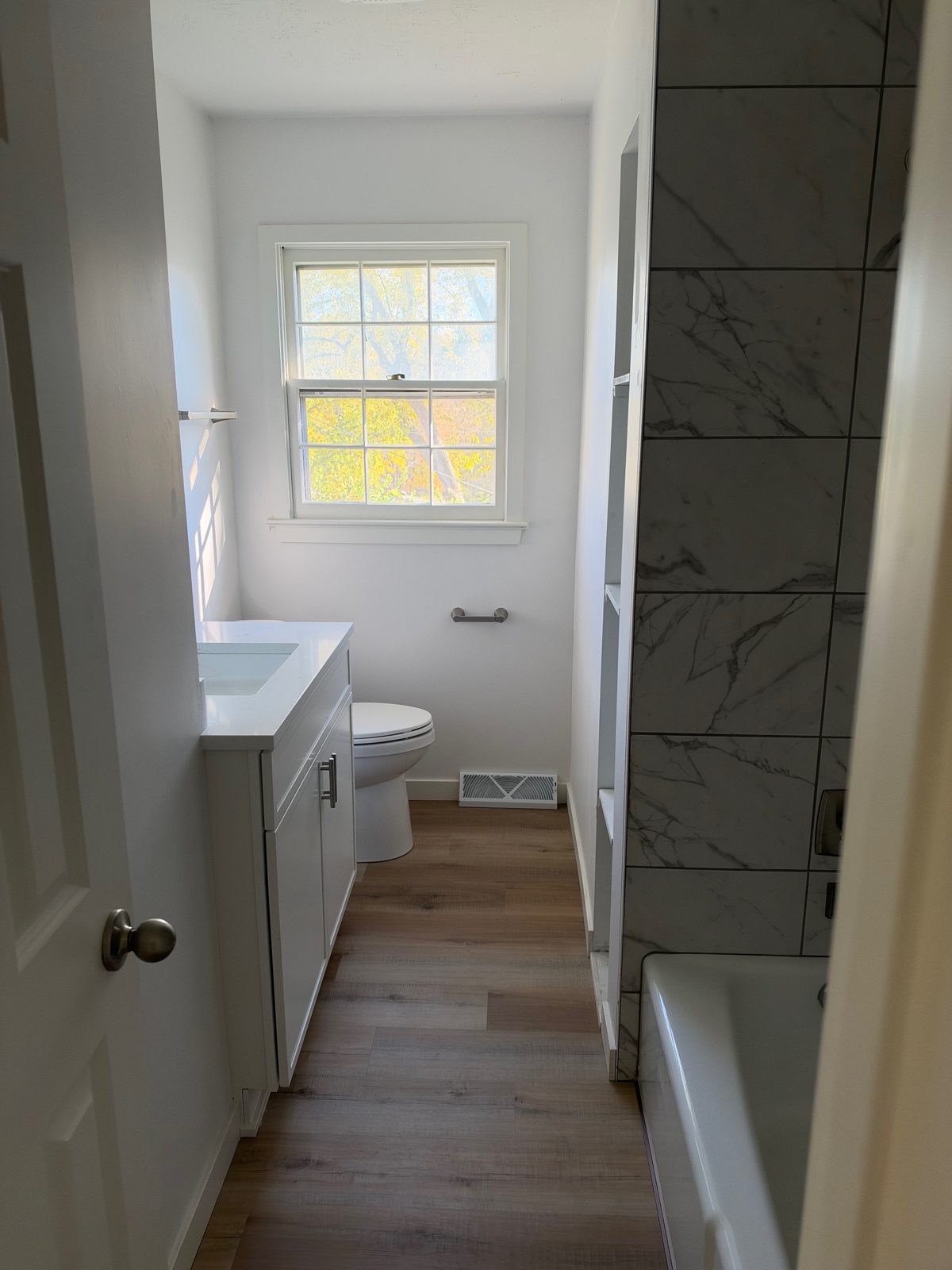
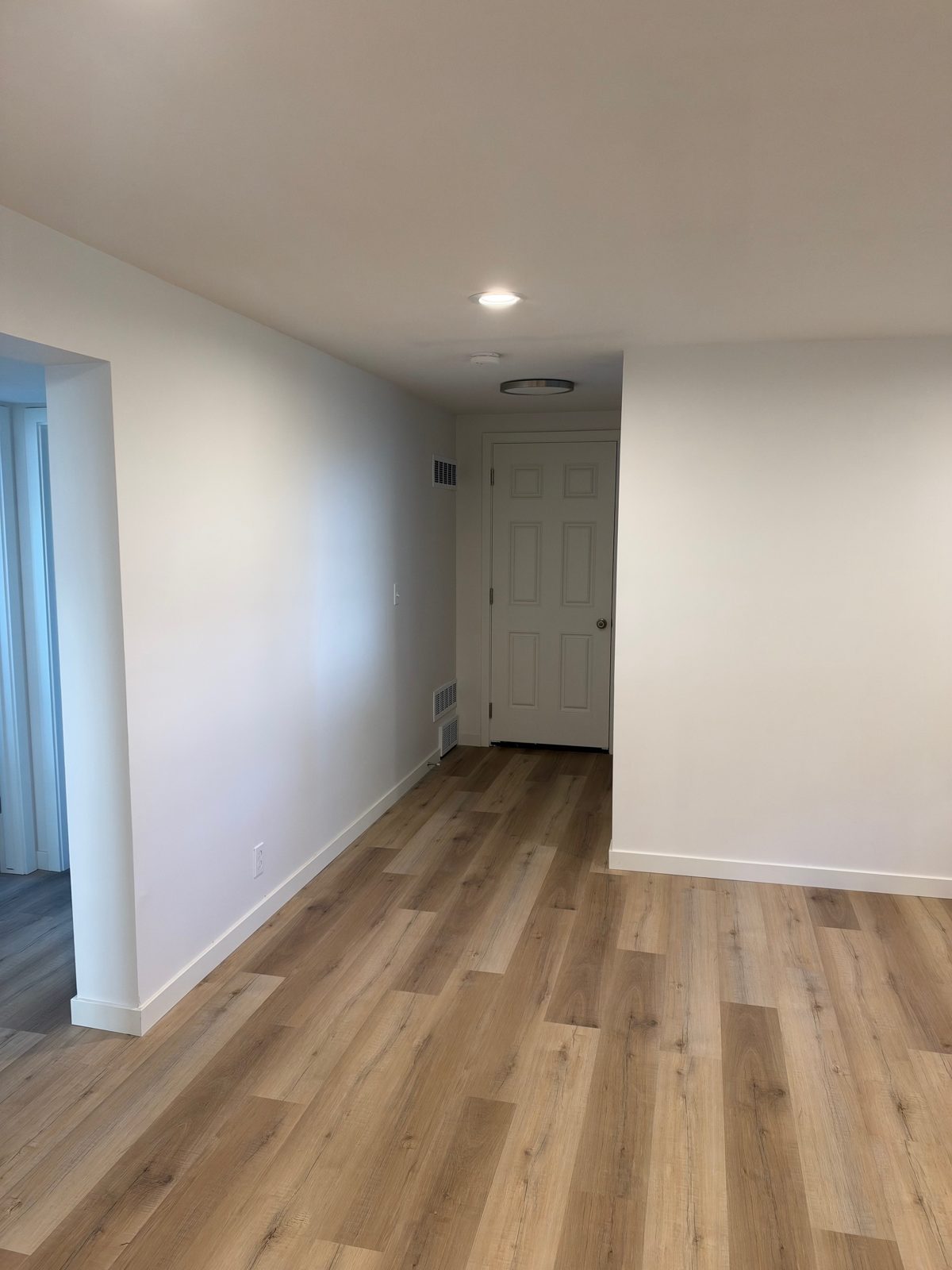
At 116th & Douglas the same plank floor runs through the living room, the halls, the hall bath and the lower level, with carpet only in the bedrooms. Mid-job the floor was already down, before the ceiling fan and the counter on the kitchen opening.
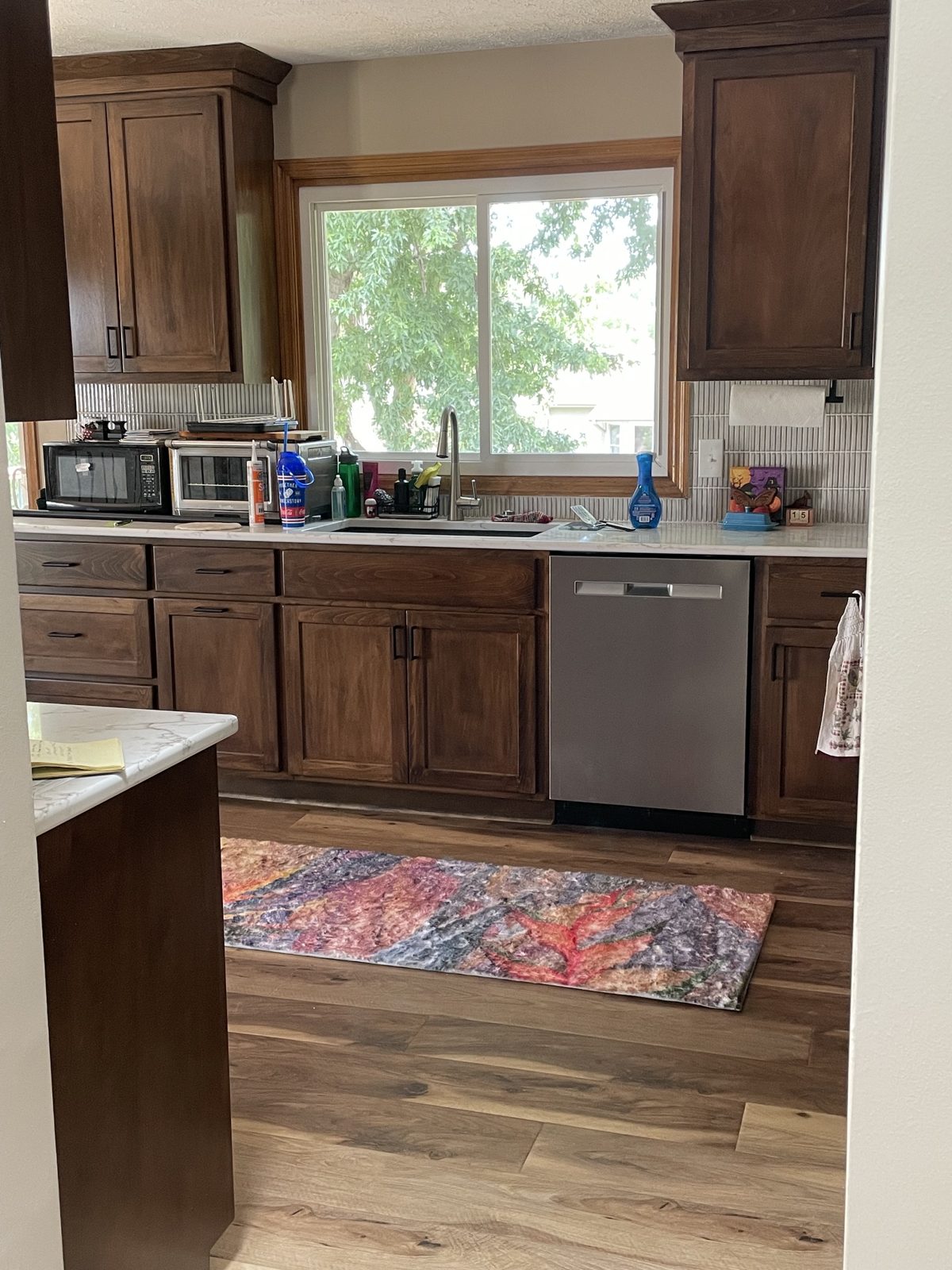
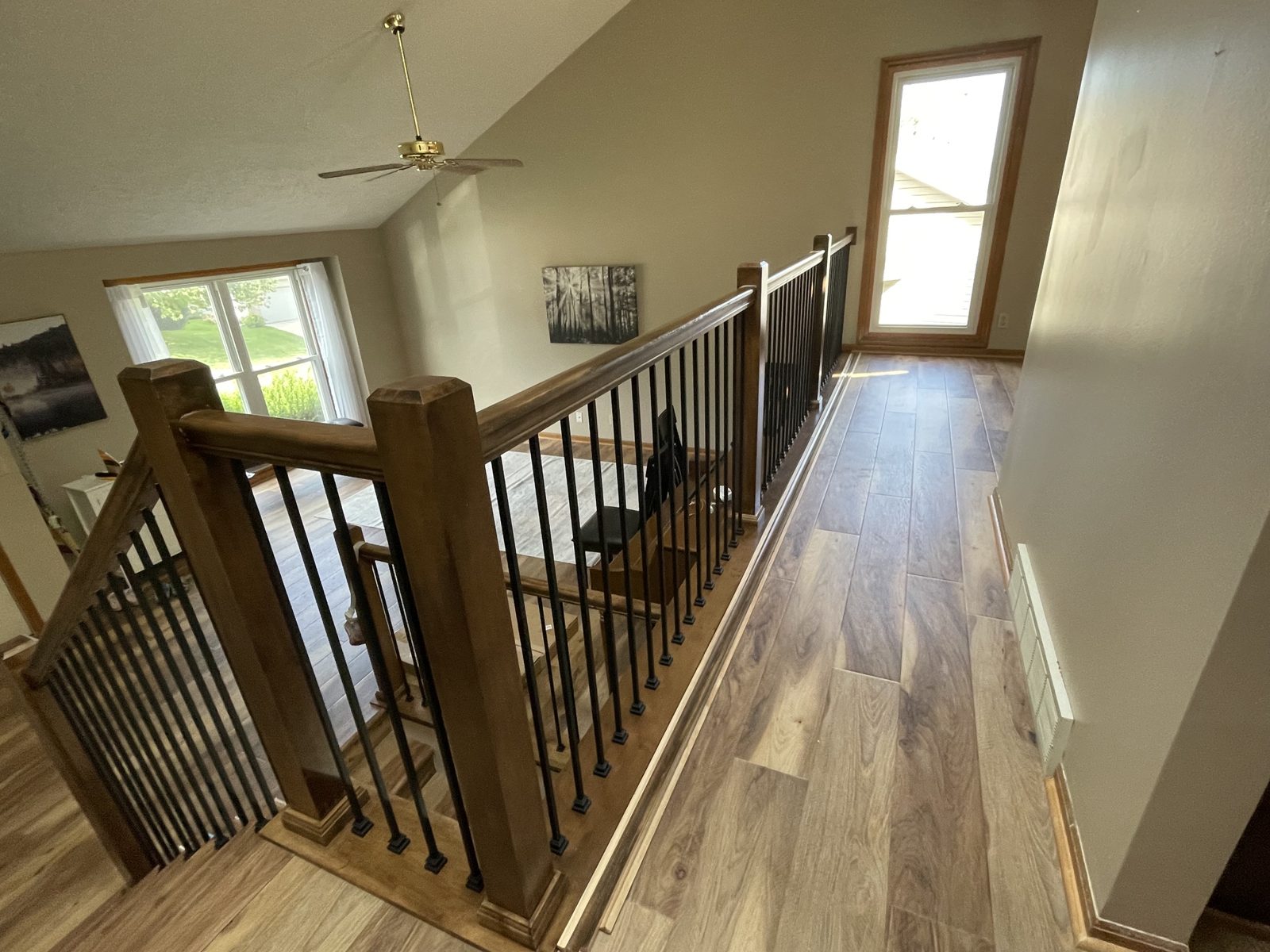
In the house with the stained kitchen, the plank floor runs through the kitchen and the loft and onto the stairs, where every tread and riser is covered in the same plank with a matching stair nose, so the floor never changes on the way up.
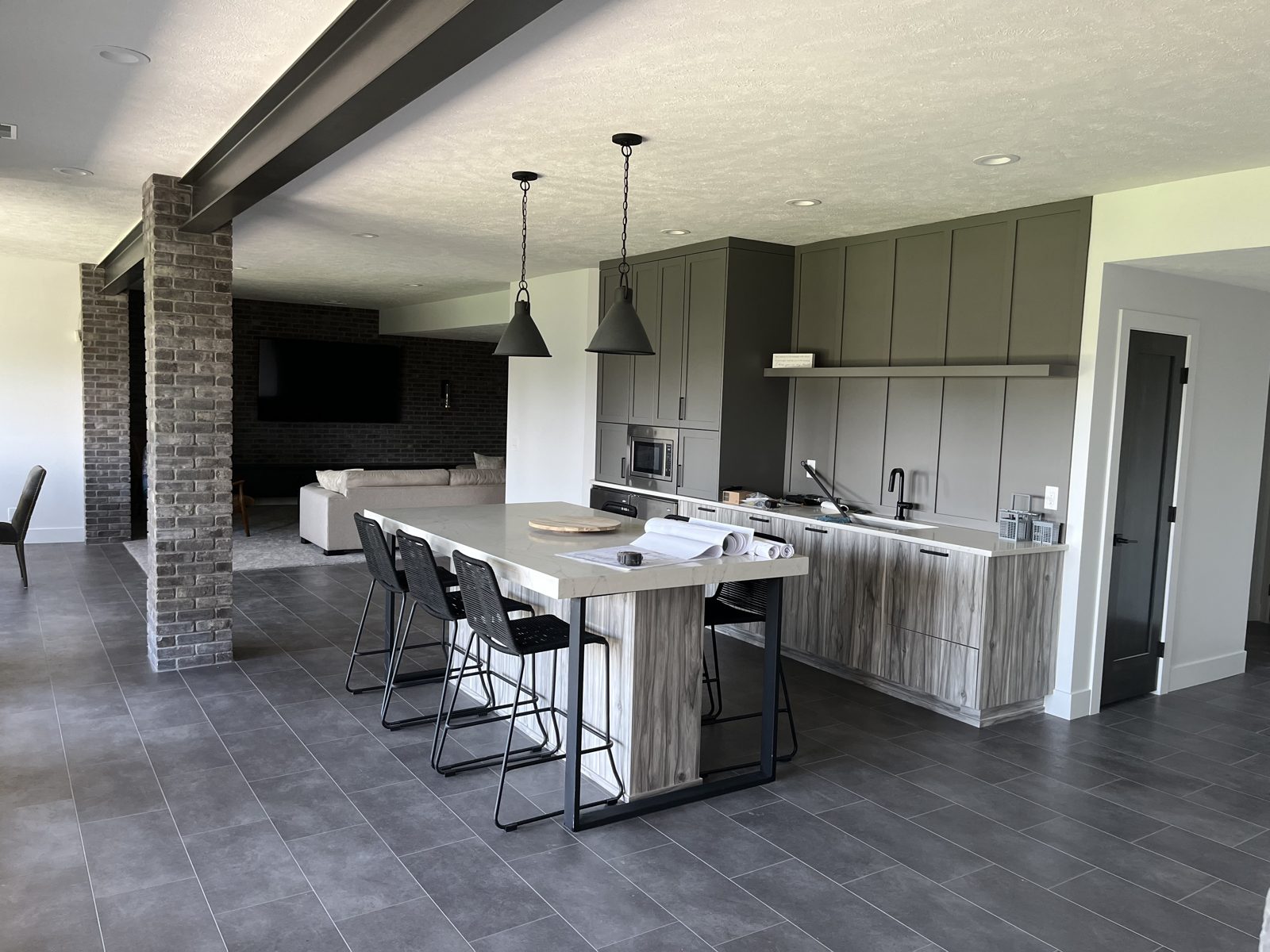
This walkout basement has large gray tile laid through the kitchenette, the dining area and the media room. In another house, a bathroom with a freestanding tub has a wood-look plank floor, which takes water far better than real wood would.
Each part is its own line on the bid.
Usually, yes, once the slab has been checked for moisture. LVP doesn't mind a concrete floor the way wood does, and it is warmer underfoot than tile. Tile is the other good basement floor; the walkout basement on this page is tile.
Hardwood if you want real wood that can be refinished down the road. LVP if the floor runs through a kitchen, a bathroom or a basement, where water is the risk, or if you want one floor through all of them.
Both work. Tile is the traditional bathroom floor and the right one inside a shower. A water-resistant plank floor can run straight in from the hall, like the hall bath at 116th & Douglas, so the bathroom matches the rest of the house.
Yes. The treads and risers get covered in the same plank, with a matching stair nose on each step, like the second job on this page. More on that on our stair remodeling page.
Flooring on its own is finish work, and Gretna and Bellevue need no permit for flooring and similar finish work. We tell you what your job needs and pull it.
Send the rooms and a rough square footage through the quote page, or call (402) 740-6572. Chris will come measure and write you a line-item bid.
Tell us which rooms need new floors and where the house is. Chris will get back to you within a business day.