How each one handles Nebraska weather
Wood (treated pine or cedar) moves with the seasons. It swells wet, shrinks dry, checks in the sun and grays if it is not sealed. Fasteners work loose over the years as the boards move. A wood deck that is cleaned and stained or sealed on a regular schedule looks good for a long time; one that is ignored does not.
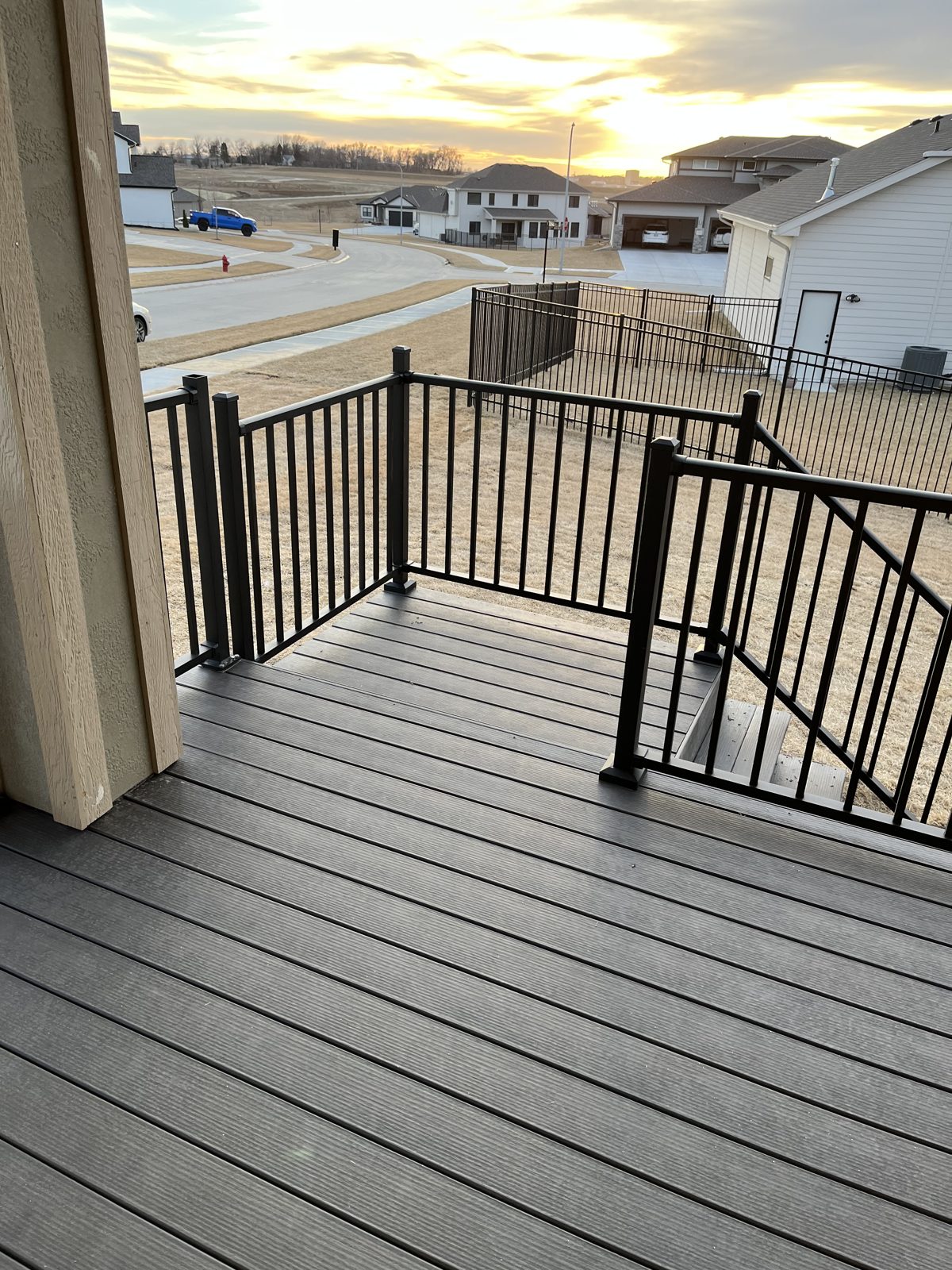
Composite (a wood-and-plastic or capped-polymer board) does not take on water the same way, so it does not check, splinter or gray. The color is in the board. It gets hotter in direct sun than wood, which matters on a south-facing deck with no shade, and the darker colors more so. It costs more per board, and it needs a frame built to its span tables, which are tighter than wood.
Maintenance, honestly
Composite gets washed. That is the list. Wood gets washed, dried, and stained or sealed every few years depending on sun exposure, and boards get replaced as they split. Over the life of the deck the wood route costs weekends; the composite route costs more on the first day. People who like the look of real wood and do not mind the schedule are happy with wood. People who want to stop thinking about the deck are happy with composite.
The frame is the deck
Whatever is on top, the structure underneath is treated lumber, and that is where a deck lives or dies. Footings have to go below the frost line, which around Omaha means deep, poured footings sized to the load, or the deck lifts and settles with every winter. The ledger has to be flashed and bolted to the house correctly or water gets into the rim joist. Joists sized and spaced to the decking, blocking where it needs it, and hangers and hardware rated for treated lumber. None of that shows when the deck is done, and all of it is why we do it ourselves.
Railings
Black aluminum railing is the one most people pick on composite decks: thin pickets, no upkeep, and it disappears against the view. Composite railing matches the deck boards. Wood railing suits a cedar deck. Any of them has to meet height and spacing code, and cable or glass infill is an option where the view is worth it.
Covered decks and porches
A roof over part of the deck changes how often you use it: shade in July, dry in a storm, a place for the grill in October. A covered deck ties into the house roof or stands on its own posts and beam, and it is engineered like any other roof for snow load. It pairs with either decking choice. See the additions and porches page for covered porches at the front of the house.
Walkouts, stairs and the yard
Many newer homes in Gretna, Elkhorn, Papillion and Bennington have a walkout basement, which means a deck up at the main floor and stairs down to the yard. Stair stringers, landings and the railing down them are a real part of the build, and a good place to spend a little more on a wider run.
Permits
Most decks need one, especially anything attached to the house or above a certain height. We pull the permit under Callaway Construction Inc., and the footing and framing inspections are part of the schedule.
Photos of both kinds are on the deck builders page. When you are ready, tell us about the yard and Chris will come look at it.
Owner-run since 1995. Chris Cannon bids the job, runs the job and answers the phone. One crew, one point of contact, no surprises.